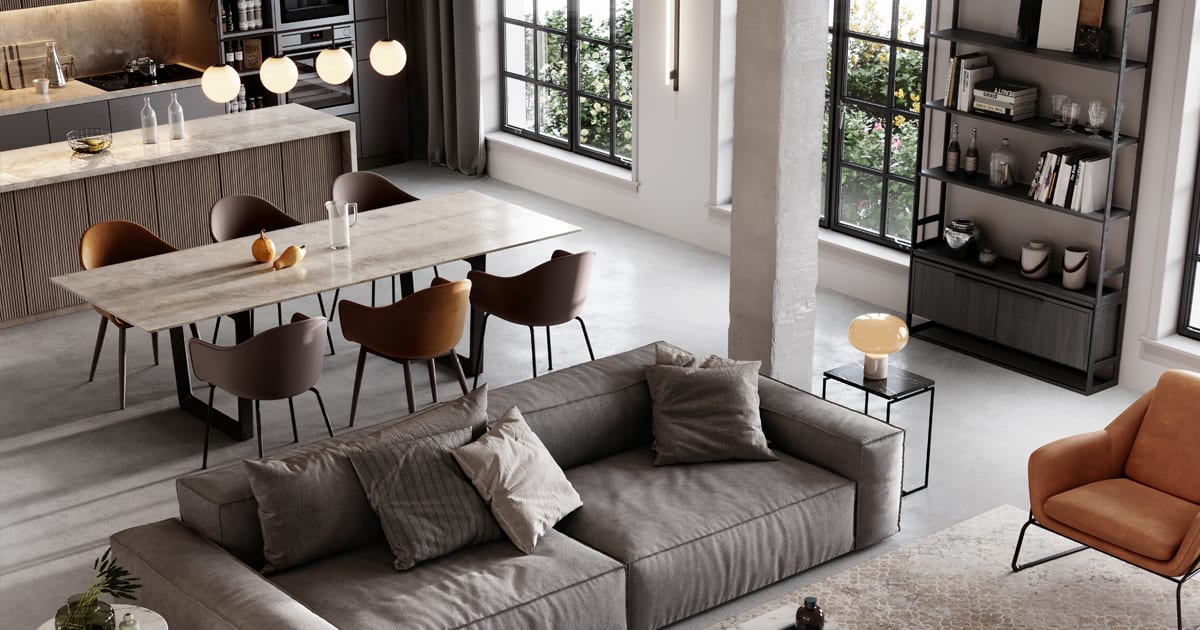

If you’ve watched any HGTV recently, you’ve probably heard the term ‘open-concept living.’ Open-concept floor plans have been immensely popular since the 20th century, prized for their spacious feel, ample light and seamless flow. But before diving into a major remodel or choosing your next home, take some time to understand what truly makes a home open-concept and determine whether it’s right for you.
What is open-concept living, exactly?
An open-concept home eliminates or reduces dividing walls between common areas, creating a unified, airy space. Typically, an open-concept floor plan combines the kitchen, dining area and living room, enhancing light, maximizing square footage and encouraging social interaction.
Traditional homes were usually highly compartmentalized, with distinct rooms for specific purposes. The Victorian era, especially, emphasized separate spaces, with formal living and dining rooms, parlors, salons and libraries that kept certain activities to assigned areas of the house.
Open layouts started emerging in the early 20th century, partially inspired by architects like Frank Lloyd Wright. His Prairie-style homes broke away from strict compartmentalization, blending spaces with open sightlines to create a more harmonious flow.
By the early 2000s, open-concept plans were often the default choice for new homes thanks to their ability to create a sense of spaciousness without increasing the home’s footprint.
And while open-concept homes remain popular, there has been a shift over the past decade. Some homeowners and designers have taken note of the drawbacks, especially in the pandemic’s wake. With more people studying, working and enjoying different forms of relaxation (e.g. meditation) at home, the lack of quiet, private spaces sometimes offers a challenge.
For more insight read the whole blog written by Georgia Garvey who writes updates for @properties here: https://blog.atproperties.com/open-concept-living/